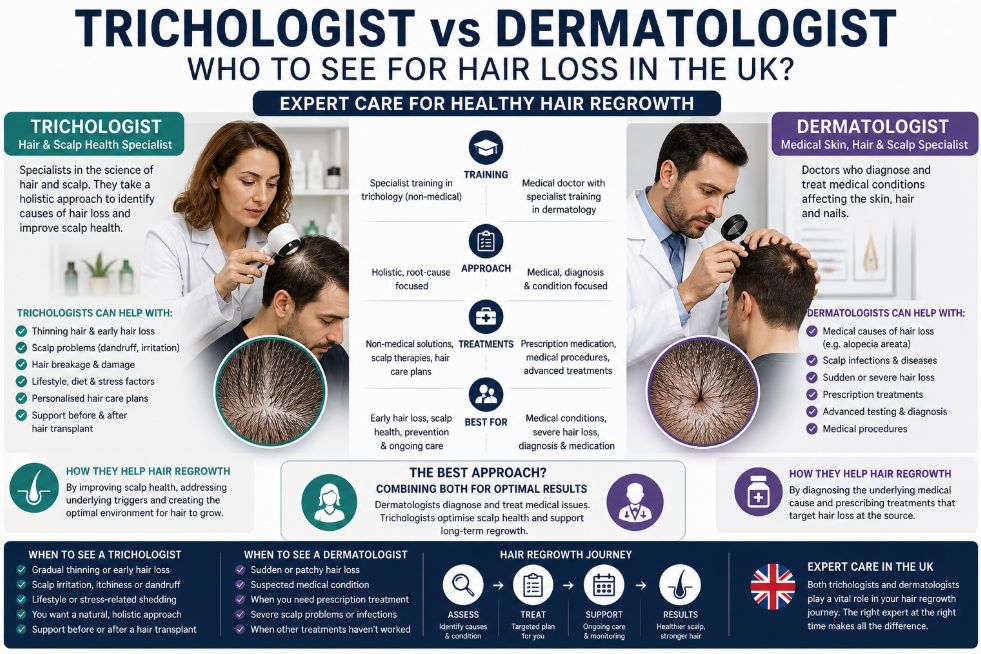
Hair loss is rarely just a cosmetic issue. For many people across the UK, it becomes a complex, frustrating experience involving uncertainty, misinformation, and trial-and-error treatments. One of the most common questions I hear from clients—especially those exploring both local and international treatment options—is simple:
Should I see a trichologist or a dermatologist?
As a hair tourism expert working with patients navigating clinics in the UK and abroad, I’ve seen how understanding this distinction can completely change the outcome of a hair restoration journey. Choosing the right specialist early on can save time, money, and unnecessary treatments.
This guide breaks down what a trichologist is, how they differ from dermatologists, and how both can play a crucial role in supporting hair regrowth.
What Is a Trichologist?
A trichologist is a specialist who focuses specifically on the health of the hair and scalp. The field of trichology is dedicated to understanding hair structure, growth cycles, scalp conditions, and non-medical causes of hair loss.
Unlike general practitioners, trichologists work exclusively with hair-related concerns, which allows for a highly focused and detailed approach.
What Trichologists Do
A trichologist typically:
- Examines the scalp and hair using magnification tools
- Analyses hair shedding patterns and density
- Identifies lifestyle, nutritional, and environmental factors
- Recommends personalised treatment plans
- Provides ongoing support and monitoring
They take a holistic view, often looking beyond just the scalp to understand underlying contributors such as stress, diet, and hair care habits.
What Is a Dermatologist?
A dermatologist is a medically qualified doctor specialising in skin, hair, and nail conditions. In the UK, dermatologists undergo extensive medical training and are licensed to diagnose and treat medical conditions.
What Dermatologists Do
Dermatologists can:
- Diagnose medical causes of hair loss
- Prescribe medications (such as finasteride or corticosteroids)
- Perform biopsies and lab tests
- Treat skin diseases affecting the scalp
Their approach is clinical and medically driven, focusing on diagnosing and treating underlying conditions.
Key Differences Between Trichologists and Dermatologists
Understanding the distinction is essential when deciding who to consult.
Training and Qualifications
- Trichologist: Specialist training in hair and scalp health (non-medical)
- Dermatologist: Medical doctor with expertise in skin and related conditions
Approach
- Trichologist: Holistic, lifestyle-focused
- Dermatologist: Clinical, diagnosis-driven
Treatments Offered
- Trichologist: Non-medical treatments, scalp care plans, product recommendations
- Dermatologist: Prescription medications, medical procedures
When to See Each
- Trichologist: Early-stage hair loss, thinning, scalp health issues
- Dermatologist: Sudden hair loss, medical conditions, severe or unexplained symptoms
How Trichologists Help with Hair Regrowth
Trichologists don’t “regrow hair” in the same way medications or surgery might—but they play a critical role in creating the right conditions for regrowth.
1. Identifying Root Causes
Hair loss is often multi-factorial. A trichologist looks at:
- Stress levels
- Nutritional deficiencies
- Hormonal imbalances (non-diagnostic observation)
- Hair care routines
By identifying triggers, they help address the underlying problem rather than just the symptoms.
2. Scalp Health Optimisation
Healthy hair starts with a healthy scalp.
Trichologists focus on:
- Removing buildup and inflammation
- Improving scalp hydration
- Balancing oil production
A well-maintained scalp creates a better environment for follicles to function properly.
3. Personalised Treatment Plans
Unlike generic solutions, trichologists tailor recommendations based on:
- Hair type
- Lifestyle
- Severity of hair loss
- Individual goals
This personalised approach often leads to better long-term outcomes.
4. Supporting Other Treatments
Trichologists often work alongside medical or surgical treatments by:
- Preparing the scalp before a hair transplant
- Supporting recovery after procedures
- Enhancing the effectiveness of topical treatments
In hair tourism, this support is especially valuable when patients return to the UK after treatment abroad.
How Dermatologists Help with Hair Regrowth
Dermatologists play a more direct role in treating hair loss medically.
1. Diagnosing Medical Conditions
Hair loss can be caused by conditions such as:
- Alopecia areata
- Scalp infections
- Autoimmune disorders
A dermatologist can diagnose these accurately.
2. Prescribing Proven Treatments
Dermatologists can prescribe medications that directly impact hair growth, including:
- DHT blockers
- Anti-inflammatory treatments
- Topical or oral therapies
These treatments can slow or reverse certain types of hair loss.
3. Advanced Testing
In complex cases, dermatologists may use:
- Blood tests
- Scalp biopsies
- Hormonal analysis
This level of investigation is essential for unexplained or severe hair loss.
Trichologist vs Dermatologist: Which One Do You Need?
The answer depends on your situation.
Choose a Trichologist If:
- You are experiencing gradual thinning
- You want a natural or holistic approach
- You need guidance on hair care and scalp health
- You are maintaining results after treatment
Choose a Dermatologist If:
- Hair loss is sudden or severe
- You suspect a medical condition
- You need prescription treatment
- Over-the-counter solutions haven’t worked
The Best Approach: Combining Both
From a hair tourism perspective, the most effective strategy often involves both specialists.
Why Combination Works
- Dermatologists address medical causes
- Trichologists optimise scalp and lifestyle factors
This dual approach creates a comprehensive treatment plan that covers all aspects of hair loss.
Role of Trichologists in Hair Tourism
Hair tourism has grown significantly among UK patients, especially for procedures like hair transplants.
However, many people overlook what happens before and after travel.
Before Treatment
A trichologist can:
- Assess scalp condition
- Recommend pre-treatment care
- Identify potential issues
After Treatment
Post-treatment care is critical.
Trichologists help by:
- Monitoring scalp healing
- Supporting regrowth
- Preventing further hair loss
This ongoing support is often missing when treatment is done abroad.
Common Hair Loss Conditions Trichologists Help With
Trichologists frequently work with:
- Telogen effluvium (stress-related shedding)
- Early-stage androgenetic alopecia
- Scalp conditions like dandruff or irritation
- Hair breakage and damage
While they don’t diagnose medical conditions, they can recognise patterns and refer you to a dermatologist when needed.
Cost of Seeing a Trichologist in the UK
Trichology consultations are typically private.
Typical Costs
- Initial consultation: £50–£150
- Follow-up sessions: £40–£100
While not covered by the NHS in most cases, many patients find value in the personalised attention.
Cost of Seeing a Dermatologist in the UK
NHS Route
- Free, but requires GP referral
- Waiting times can be long
Private Route
- £150–£300 per consultation
Private dermatology offers faster access but at a higher cost.
Common Mistakes to Avoid
From years of experience, these are the most common pitfalls:
1. Self-Diagnosing
Hair loss can have multiple causes. Guessing often leads to ineffective treatments.
2. Choosing the Wrong Specialist
Seeing a trichologist for a medical condition—or a dermatologist for purely lifestyle-related thinning—can delay results.
3. Expecting Instant Regrowth
Hair growth is a slow process regardless of the approach.
4. Ignoring Scalp Health
Even with medical treatment, poor scalp conditions can limit progress.
Psychological Impact: Why Guidance Matters
Hair loss affects more than appearance.
Working with the right specialist can:
- Reduce anxiety
- Provide clarity
- Restore confidence
Patients often feel more in control once they understand the cause and have a structured plan.
Can a Trichologist Replace a Dermatologist?
No—and this is an important point.
Trichologists are not medical doctors. They cannot:
- Prescribe medication
- Diagnose medical conditions
- Perform medical procedures
However, they complement dermatologists by focusing on areas medicine often overlooks.
Can a Dermatologist Replace a Trichologist?
Also no.
Dermatologists may not always provide:
- Detailed lifestyle guidance
- Ongoing hair care support
- Personalised non-medical strategies
Both roles serve different but equally valuable purposes.
Final Verdict: Which One Is Better?
It’s not about which is better—it’s about which is right for your situation.
- For medical diagnosis and treatment: dermatologist
- For ongoing care and optimisation: trichologist
The best results often come from combining both approaches.
Should You See a Trichologist?
If you are experiencing early hair loss, scalp issues, or simply want expert guidance, seeing a trichologist is a smart first step.
They can:
- Identify contributing factors
- Improve scalp health
- Guide you toward the right treatments
Closing Thoughts
Hair loss is rarely a one-dimensional problem, and treating it effectively requires more than a single solution.
Trichologists and dermatologists each play a vital role. One focuses on the medical side, the other on the practical and holistic aspects of hair care.
For UK patients—especially those exploring treatment abroad—understanding this distinction can make a significant difference in outcomes.
Instead of choosing one over the other, the most effective strategy is to use both where appropriate. When combined, they offer a complete, balanced approach to hair regrowth that addresses not just the symptoms, but the bigger picture.
And in a field where results depend on consistency, knowledge, and long-term planning, that balance is exactly what leads to success.