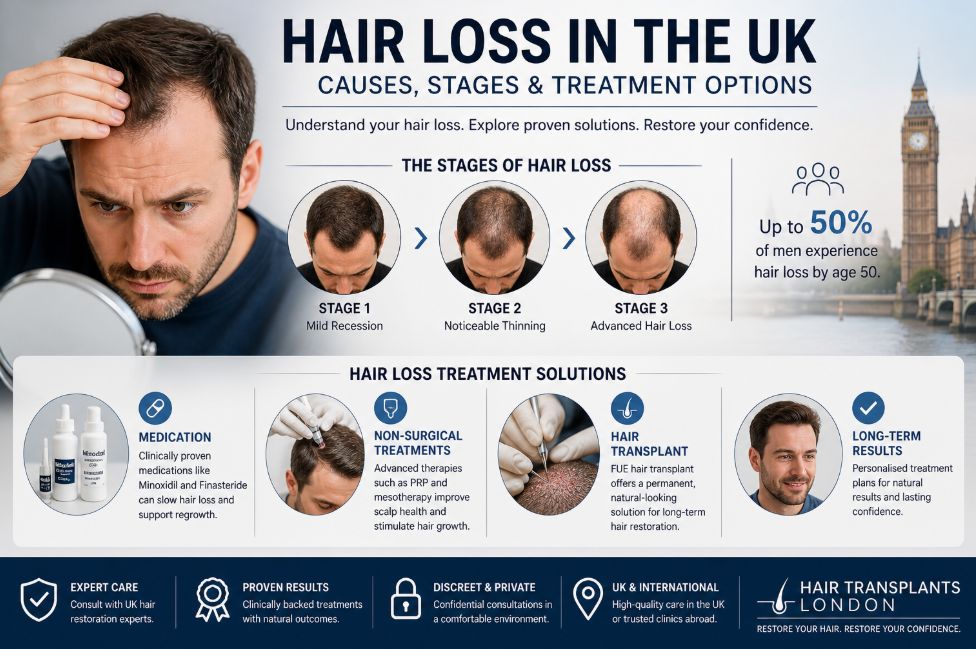
Hair loss is one of the most common yet emotionally charged conditions affecting both men and women across the UK. While it is often associated with ageing, the reality is far more complex. From genetic predisposition to lifestyle factors, understanding the causes and available treatments is essential for anyone considering solutions, including medical travel.
Understanding Hair Loss: What’s Really Happening?
Hair loss, medically known as alopecia, occurs when the normal hair growth cycle is disrupted. Each hair follicle follows a cycle of growth (anagen), transition (catagen), and rest (telogen). When this cycle shortens or follicles shrink, hair becomes thinner and eventually stops growing.
In the UK, androgenetic alopecia – commonly called female or male pattern baldness – is the leading cause. However, it is far from the only one.
Common Causes of Hair Loss
Hair loss is rarely caused by a single factor. More often, it is a combination of genetics, health, and lifestyle.
-
Genetic factors: The most common cause, especially in men. Sensitivity to dihydrotestosterone (DHT) leads to follicle miniaturisation.
-
Hormonal changes: Pregnancy, menopause, thyroid disorders, and conditions like PCOS can trigger shedding.
-
Stress and lifestyle: Physical or emotional stress can push hair into the shedding phase, known as telogen effluvium.
-
Nutritional deficiencies: Low levels of iron, vitamin D, zinc, or protein can weaken hair growth.
-
Medical conditions: Autoimmune diseases such as alopecia areata or scalp infections can lead to patchy or widespread loss.
-
Medications: Certain drugs, including chemotherapy, antidepressants, and blood pressure medication, may contribute.
-
Hair care practices: Excessive heat styling, tight hairstyles, and harsh treatments can damage follicles over time.
For UK patients, seasonal changes and reduced sunlight exposure may also impact vitamin D levels, indirectly affecting hair health.
Early Signs You Shouldn’t Ignore
Hair loss often begins subtly, making early detection key to effective treatment.
-
Gradual thinning at the crown or temples.
-
Increased hair shedding when brushing or washing.
-
A widening parting line in women.
-
Receding hairline in men.
-
Patchy or uneven hair loss.
Recognising these signs early allows for more treatment options and better outcomes.
Non-Surgical Hair Loss Treatments
Not everyone needs or wants surgery. In fact, many cases can be stabilised or improved with non-invasive approaches.
Medications
Two clinically proven medications dominate the market:
-
Minoxidil: A topical treatment that improves blood flow to hair follicles and prolongs the growth phase. Available over the counter in the UK.
-
Finasteride: An oral prescription medication that reduces DHT levels. Primarily used for men, though off-label use in women is sometimes considered.
These treatments are most effective when started early and used consistently.
PRP (Platelet-Rich Plasma) Therapy
PRP has gained popularity across UK clinics and hair tourism destinations. The process involves drawing a small amount of the patient’s blood, processing it to concentrate platelets, and injecting it into the scalp.
Benefits include:
-
Stimulating dormant follicles.
-
Improving hair thickness.
-
Minimal downtime.
Results vary, but many patients report noticeable improvements after several sessions.
Low-Level Laser Therapy (LLLT)
Laser devices, including helmets and combs, use light energy to stimulate follicle activity.
-
Non-invasive and pain-free.
-
Suitable for home use.
-
Requires consistent application over months.
While not a miracle cure, LLLT can complement other treatments.
Nutritional and Supplement Support
Hair health is closely linked to nutrition. Common supplements include:
-
Biotin.
-
Iron (if deficient).
-
Vitamin D.
-
Omega-3 fatty acids.
However, supplementation should ideally follow medical testing, especially in the UK where unnecessary supplementation is discouraged by healthcare professionals.
Scalp Micropigmentation (SMP)
For those not seeking regrowth, SMP offers a cosmetic solution. Pigment is applied to the scalp to mimic hair follicles, creating the appearance of a fuller head or a shaved look.
-
Immediate visual improvement.
-
No surgery required.
-
Long-lasting but requires maintenance.
Surgical Hair Restoration Options
When hair loss becomes advanced, surgical intervention may provide the most effective and permanent results. This is where hair tourism has grown rapidly, with UK patients often travelling abroad for cost-effective procedures.
Follicular Unit Extraction (FUE)
FUE is the most popular hair transplant technique today.
-
Individual follicles are extracted and implanted into thinning areas.
-
Minimal scarring.
-
Faster recovery compared to older methods.
It is widely offered in countries like Turkey, Hungary, and Poland, often at significantly lower prices than UK clinics.
Follicular Unit Transplantation (FUT)
Also known as the strip method:
-
A strip of scalp is removed and dissected into grafts.
-
Higher graft yield in a single session.
-
Leaves a linear scar, which may limit short hairstyles.
FUT is less common today but still suitable for certain cases.
Direct Hair Implantation (DHI)
A variation of FUE, DHI uses a specialised pen to implant follicles directly.
-
Greater precision in angle and direction.
-
Denser packing possible.
-
Often marketed as a premium option in hair tourism clinics.
However, outcomes depend more on surgeon skill than the technique itself.
Hair Tourism: Why UK Patients Travel Abroad
Hair transplant costs in the UK can range from £4,000 to £15,000, depending on the clinic and number of grafts. This has led many patients to consider treatment abroad.
Popular destinations include:
-
Turkey: Known for high-volume clinics and competitive pricing.
-
Hungary: Growing reputation for quality medical tourism and EU standards.
-
Poland: Offers a balance between cost and accessibility for UK travellers.
Advantages:
-
Lower costs, often including accommodation and transfers.
-
Experienced surgeons performing high volumes of procedures.
-
Short waiting times.
Risks to consider:
-
Variable clinic quality.
-
Limited aftercare once back in the UK.
-
Regulatory differences.
Choosing a reputable clinic with verified results and clear communication is essential.
Recovery and Expected Results
Hair transplant recovery is generally straightforward but requires patience.
-
Initial healing: 7–10 days.
-
Shedding phase: Transplanted hairs fall out within a few weeks.
-
New growth: Begins around 3–4 months.
-
Full results: Typically visible after 9–12 months.
Following aftercare instructions is critical, especially for patients travelling back to the UK shortly after surgery.
Preventing Hair Loss: What Actually Works
While not all hair loss can be prevented, especially genetic types, several strategies can slow progression.
-
Early treatment: Starting medication at the first signs of loss can preserve existing hair.
-
Healthy diet: Adequate protein, iron, and vitamins support follicle health.
-
Stress management: Chronic stress is a known trigger for shedding.
-
Gentle hair care: Avoid tight styles and excessive heat.
-
Regular check-ups: Identifying underlying conditions early can prevent worsening.
Prevention is often more effective and less costly than restoration.
Choosing the Right Solution
There is no one-size-fits-all answer to hair loss. The best approach depends on:
-
The cause of hair loss.
-
The stage of progression.
-
Budget and expectations.
-
Willingness to undergo surgery or travel.
For many UK patients, a combination of treatments delivers the best results. For example, medication to stabilise loss combined with a transplant to restore density.
Final Thoughts
Hair loss can feel overwhelming, but modern treatments offer more options than ever before. Whether choosing non-surgical therapies in the UK or exploring hair tourism abroad, informed decisions lead to better outcomes.
Understanding the root cause, acting early, and selecting reputable providers are the key factors that separate successful results from disappointment.