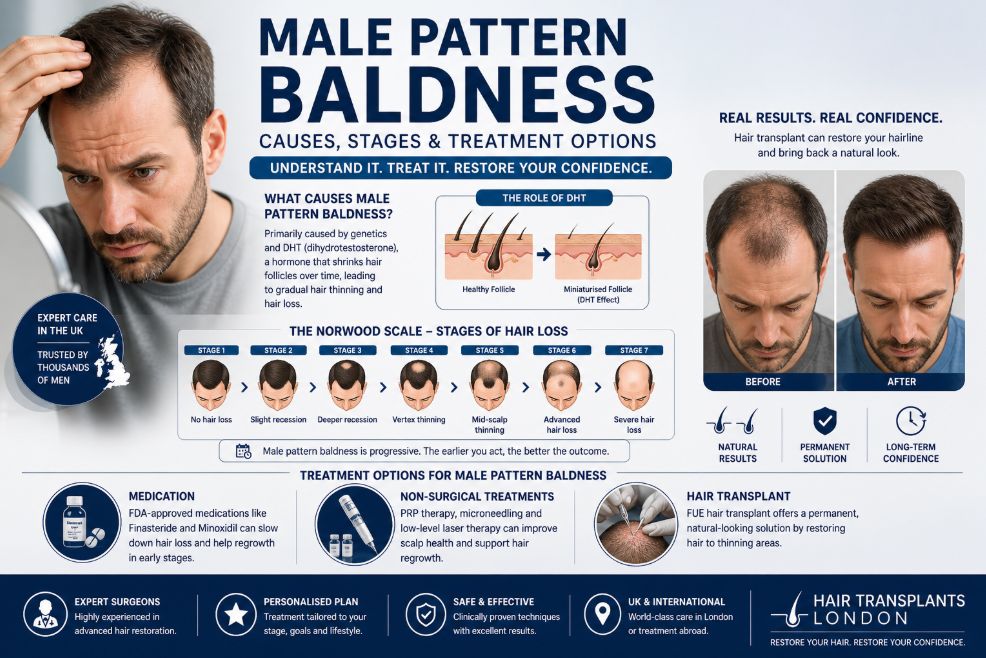
Male pattern baldness is the most common cause of hair loss in men, but it is also one of the most treatable when you understand your options and act early. For men in the UK, there is now a full spectrum of approaches, from prescription medicines to hair transplants and international hair tourism, offering both short-term improvements and lasting solutions.
What Is Male Pattern Baldness?
Male pattern baldness (androgenetic alopecia) is a genetically driven condition caused by sensitivity to a hormone called dihydrotestosterone (DHT). Over time, DHT shrinks susceptible hair follicles, especially around the temples and crown, leading to progressively finer hair and eventually visible baldness.
The process follows a typical pattern:
-
Receding hairline at the temples.
-
Thinning at the crown.
-
Gradual merging of these areas, leaving a horseshoe-shaped band of hair.
While it is often associated with ageing, many men notice changes in their 20s or 30s, and early intervention can significantly slow the process.
Early Signs You Shouldn’t Ignore
Recognising male pattern baldness early gives you more effective and less invasive options.
Common early signs include:
-
Thinning at the crown that shows more scalp under bright light.
-
A hairline that is slightly higher than in old photos, especially at the temples.
-
More hairs on your pillow, in the shower, or in your brush.
-
A “see-through” appearance when your hair is wet or under strong lighting.
If these changes are gradual and follow the typical pattern, male pattern baldness is likely; a GP or hair specialist can confirm and rule out other causes.
Non-Surgical Medical Treatments
For many UK men, the first line of defence is medication. These treatments work best when started early and used consistently.
Finasteride
Finasteride is a prescription tablet that lowers DHT levels, helping to protect hair follicles from further miniaturisation.
Key points:
-
Taken once daily.
-
Helps slow or stop further loss and can regrow some hair in many men.
-
Available in the UK via private prescriptions and online doctor services.
-
Only for men; it is not suitable for women.
Finasteride is not a quick fix. Most men need to wait at least three to six months to see visible changes, and benefits continue while you remain on the medication.
Minoxidil
Minoxidil is a topical solution or foam applied directly to the scalp. It increases blood flow to hair follicles and prolongs the growth phase of the hair cycle.
Key points:
-
Available over the counter in UK pharmacies.
-
Applied once or twice daily to thinning areas.
-
Works for many men with early to moderate thinning, especially at the crown.
-
Needs long-term, consistent use; stopping treatment usually leads to renewed shedding.
Finasteride and minoxidil are often used together to tackle male pattern baldness from different angles – one protecting follicles from DHT, the other stimulating growth.
Advanced Non-Surgical Options
Beyond standard medication, a growing range of advanced non-surgical treatments can support or enhance results.
Platelet-Rich Plasma (PRP) Therapy
PRP uses a small sample of your blood, processed to concentrate platelets, which are then injected into the scalp. Platelets contain growth factors that may help stimulate follicle activity and improve hair thickness.
Key benefits:
-
Minimally invasive with short downtime.
-
Often used alongside finasteride and minoxidil for better overall results.
-
Delivered through a series of sessions over several months.
PRP is widely offered by hair restoration and aesthetic clinics, with some UK practices and hair tourism centres promoting it as part of a package.
Low-Level Laser Therapy (LLLT)
Low-level laser therapy uses red light to stimulate hair follicles and improve scalp circulation. It is available as in-clinic treatments or at-home devices such as laser caps and combs.
Key points:
-
Non-invasive and drug-free.
-
Best for mild to moderate thinning.
-
Requires regular, long-term use to maintain benefits.
LLLT is often positioned as an add-on for men who want to maximise gains from medication without further medical side effects.
Lifestyle and Nutritional Support
Although male pattern baldness is largely genetic, overall health influences hair quality.
Helpful measures include:
-
Optimising diet: Adequate protein, iron, vitamin D, and zinc support healthy hair growth.
-
Managing stress: High stress can trigger temporary shedding that worsens the appearance of pattern loss.
-
Gentle hair care: Avoid harsh chemical treatments and very tight hairstyles that add traction.
Supplements alone rarely reverse male pattern baldness, but they can support the scalp environment and existing treatments.
Cosmetic and Camouflage Solutions
Not every man wants medication or medical procedures. For some, cosmetic approaches provide enough confidence with no downtime.
Scalp Micropigmentation (SMP)
Scalp micropigmentation uses small pigment deposits to mimic hair follicles on the scalp.
Advantages:
-
Creates the appearance of a closely shaved, even hairline or denser coverage under thinning hair.
-
No surgery or ongoing medications required.
-
Suitable even for advanced baldness.
SMP is popular among men who embrace a buzzcut look but want a structured hairline and more uniform appearance.
Hair Systems and Styling
Modern hair systems (non-surgical hair replacement) and skilled styling can dramatically reduce the visual impact of hair loss.
Options include:
-
Custom hair units fitted and maintained by specialists.
-
Strategic cuts and volumising products.
-
Colour techniques that reduce contrast between hair and scalp.
These methods do not stop hair loss but can be part of a personalised strategy, especially for men not ready for medical treatment or surgery.
Hair Transplant Surgery: The Only Permanent Restoration
Once follicles are severely miniaturised or lost, medications and non-surgical treatments cannot bring them back. At this stage, hair transplant surgery is the only way to permanently restore hair in those areas.
How Hair Transplants Work
Hair transplants move healthy follicles from a “donor area” (usually the back and sides of the scalp) to balding zones. Because these donor follicles are resistant to DHT, they typically continue growing for life after being transplanted.
Two main techniques are used:
-
Follicular Unit Extraction (FUE): Individual follicles are removed with tiny punches and implanted into thinning areas.
-
Follicular Unit Transplantation (FUT): A strip of scalp is removed, divided into grafts, and transplanted; this leaves a linear scar but can yield many grafts in one session.
Modern methods focus on natural hairline design, density planning, and careful angling of grafts to match existing hair growth patterns.
Lasting Results and Realistic Expectations
When done by an experienced surgeon, hair transplants:
-
Provide permanent hair in transplanted areas, with survival rates often above 90%.
-
Deliver visible growth within three to six months, with full results between nine and twelve months.
-
Can dramatically improve overall appearance and confidence.
However, transplants do not stop ongoing male pattern baldness in non-transplanted hair, which is why many surgeons recommend ongoing medical therapy alongside surgery.
Hair Tourism for UK Men
Rising costs in the UK and strong global competition have made hair tourism a major trend. Many men travel abroad for FUE or FUT procedures to achieve similar or higher graft counts at lower prices.
Popular hair transplant destinations for UK patients include:
-
Turkey: Known for large numbers of clinics and highly competitive prices.
-
Hungary and Poland: Offer EU-regulated clinics with attractive packages and easy travel from the UK.
Typical benefits of travelling abroad:
-
Lower overall cost, often including hotel and transfers.
-
High-volume surgeons with extensive experience in male pattern baldness cases.
-
Short waiting times compared to some domestic services.
Key risks and considerations:
-
Variation in quality between clinics, especially in high-volume, budget settings.
-
Limited face-to-face aftercare once you return to the UK.
-
Differences in regulation and patient protection.
Reviewing independent patient feedback, checking surgeon credentials, and understanding who actually performs the procedure are crucial steps before committing to surgery abroad.
Short-Term vs Lasting Solutions
Different treatments offer different levels of durability. Understanding this helps set realistic expectations.
This mix of options allows you to tailor a plan that fits your stage of hair loss, budget, and personal preferences.
Building a Long-Term Strategy
Male pattern baldness is a chronic, progressive condition, so thinking in terms of a long-term strategy is more effective than chasing quick fixes.
A practical approach for many UK men might look like this:
-
Early stage:
-
Confirm diagnosis with a GP or hair specialist.
-
Start finasteride and/or minoxidil to stabilise loss.
-
Consider supportive options like PRP or LLLT if budget allows.
-
-
Moderate stage:
-
Continue medical therapy to protect remaining hair.
-
Evaluate suitability for a hair transplant with reputable UK or international clinics.
-
-
Advanced stage:
-
Focus on transplant planning, potentially over multiple sessions.
-
Consider SMP as a complementary technique for added density or a defined hairline.
-
Throughout each stage, lifestyle adjustments and gentle hair care can help maintain the best possible condition of your existing hair.
When Should You Act?
The most effective time to act is as soon as you notice consistent thinning that follows a typical male pattern. Early treatment preserves more native hair, gives medications a better chance to work, and may reduce the number of grafts needed if you choose surgery later.
You should seek professional advice if:
-
Hair loss is causing you distress or affecting your confidence.
-
You are unsure whether your hair loss is genetic or linked to another health issue.
-
You are considering medication and want to understand potential benefits and risks.
-
You want an expert assessment of your suitability for a hair transplant, either in the UK or abroad.
A clear diagnosis and personalised plan will always outperform guesswork and impulsive decisions driven by advertising.
A Confident Future With Lasting Solutions
Male pattern baldness may be common, but that does not mean you have to accept it without options. Proven medical treatments can slow or even partially reverse thinning for many men, while modern hair transplant techniques offer permanent restoration once baldness has advanced. With careful planning, informed choices, and realistic expectations, you can build a long-term strategy that protects your hair – and your confidence – for years to come.