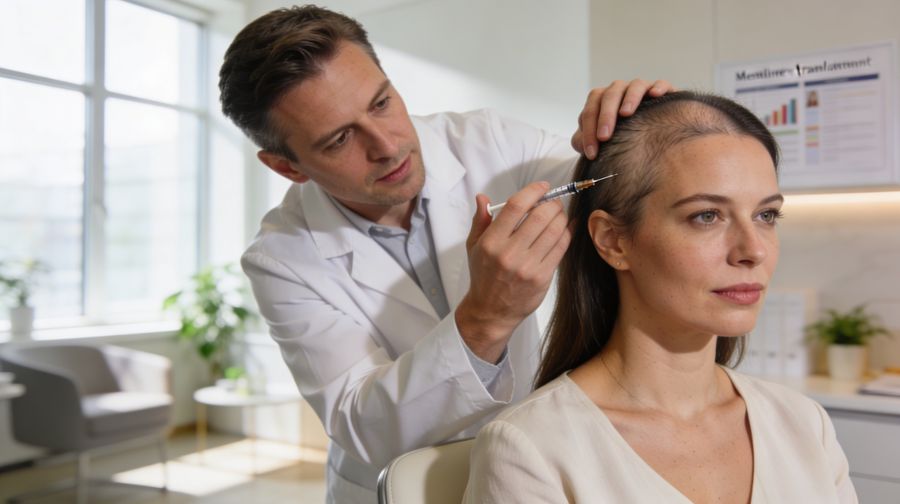
Mesotherapy and hair transplant surgery are often treated as separate worlds: one is seen as a gentle, injectable “boost” for thinning hair, the other as a structural, surgical solution for baldness. In practice, if you have pattern hair loss in Ireland or the UK, the smartest strategy is often to understand how these two approaches can work together rather than choosing one in isolation.
This review walks through what mesotherapy actually is, what hair transplants can and cannot do, and how combining the two can create a more natural, longer‑lasting result for men and women with thinning hair.
What mesotherapy for hair really is
In the context of hair loss, mesotherapy usually means a series of micro‑injections into the scalp, delivering a customised blend of ingredients directly around the hair follicles. These “cocktails” vary by clinic, but they often include some combination of:
-
Vitamins and minerals
-
Amino acids
-
Antioxidants
-
Trace elements
-
Sometimes mild vasodilators or other active compounds
The goal is not to inject filler or bulk into the skin, but to improve the local environment around the follicles: better microcirculation, better nutrient supply and, in some protocols, reduced inflammation.
Because the injections are shallow and use very fine needles, most sessions are tolerated with minimal discomfort. A numbing cream or local cooling can be used for sensitive patients.
What mesotherapy can do for thinning hair
Mesotherapy sits firmly in the “supportive” category of hair loss treatments. When done properly and on appropriate candidates, it can:
-
Reduce excessive shedding over time
-
Improve the texture and strength of existing hair
-
Help miniaturised hairs look and feel thicker
-
Support the scalp when used alongside proven medical treatments
Many patients describe their hair as looking shinier, less brittle and easier to style after a course of treatment. In early or moderate thinning, this boost in quality can translate into visibly better coverage.
However, mesotherapy does not create new follicles or re‑populate areas that are completely bald. Where the scalp is shiny, smooth and bare, injections alone will not rebuild density.
Typical mesotherapy protocol
While details differ from clinic to clinic, a common pattern looks like this:
-
Induction phase
Weekly or fortnightly sessions for 6–8 weeks. The idea is to saturate the scalp with the chosen blend and kick‑start the process. -
Consolidation phase
Sessions every 3–4 weeks for several months, depending on response and goals. -
Maintenance phase
Top‑up treatments every few months to maintain gains, often combined with home care and other therapies.
Results are gradual: changes in shedding and texture may appear after a couple of months; more obvious improvements in overall look are usually judged at 4–6 months.
What a hair transplant actually does
A hair transplant is a surgical procedure that redistributes permanent hair from the back and sides of the scalp to thinning or bald areas. Those donor hairs are genetically more resistant to androgenetic alopecia and usually continue to behave that way in their new location.
Two main techniques are used in modern practice:
-
FUE (Follicular Unit Extraction)
Individual follicular units are harvested with tiny punches and implanted into micro‑incisions in the recipient area. -
FUT (Follicular Unit Transplantation / strip)
A thin strip of scalp is removed from the donor zone and dissected into follicular units, which are then implanted. The donor area is closed with a fine linear scar.
Both techniques, in experienced hands, can produce very natural hairlines and density. The choice depends on your hair type, donor capacity, hairstyle preferences, future planning and the surgeon’s advice.
What surgery can and cannot achieve
A transplant can:
-
Rebuild a receding hairline in a way that frames the face
-
Fill in balding patches like the crown
-
Densify areas where hair has thinned significantly
-
Provide a permanent foundation of hair in treated areas
But it cannot:
-
Stop ongoing thinning of non‑transplanted hair
-
Replace unlimited amounts of hair – donor supply is finite
-
Promise teenage density everywhere; the aim is a cosmetic illusion of fullness
This is why a transplant is best viewed as one major step inside a long‑term plan, not a stand‑alone “cure”.
Mesotherapy versus hair transplants: different jobs, not rivals
A fair way to compare the two is to ask: what problem is each treatment designed to solve?
Where mesotherapy makes most sense on its own
Mesotherapy is often a good fit when:
-
Hair loss is in its early stages
-
There is general thinning but no big, clearly bald patches
-
The main complaint is quality: dull, weak, lifeless hair
-
You’re not ready for surgery or don’t yet need it
-
You want a low‑downtime option with gradual, natural‑looking improvement
In these situations, mesotherapy can act as a scalp fitness programme. It helps the follicles you still have do a better job, and can complement other non‑surgical treatments.
When a hair transplant becomes the appropriate step
Surgery is usually considered when:
-
There are obvious bald areas (deeply receded hairline, large crown loss)
-
Non‑surgical measures no longer make a visible difference to those patches
-
You want a structural, permanent change to your hairline or density
-
Your donor area is strong enough for redistribution
At that point, mesotherapy alone will rarely give the sort of cosmetic impact most patients are looking for. The missing ingredient is new hair in the right places – and that is what transplantation provides.
Why combining mesotherapy and hair transplants often works best
The real power comes when you stop thinking in terms of “either/or” and instead design a joined‑up plan that uses each treatment where it is strongest.
There are three main ways they complement each other.
1. Mesotherapy before a hair transplant: preparing the ground
Using mesotherapy in the months before surgery can:
-
Improve scalp health and microcirculation
-
Reduce dandruff, excess oiliness or mild inflammation that might interfere with healing
-
Strengthen miniaturised hairs around the planned recipient area
If your scalp is dry, irritated, or has signs of chronic inflammation, a short course of mesotherapy (plus appropriate medical care) can bring it into better condition before a surgical procedure. Think of it as preparing the soil before planting.
A healthier scalp:
-
Is more comfortable to work on
-
May heal more predictably
-
Can support both transplanted and native hair more effectively afterwards
2. Mesotherapy around the time of surgery: supporting recovery
Some clinics integrate targeted injections during the peri‑operative period (typically after the grafts are safely anchored). The idea is to:
-
Support microcirculation in the recipient area
-
Help calm low‑grade inflammation
-
Provide local nutrients during a metabolically demanding healing phase
While graft survival mainly depends on surgical technique, careful handling and your overall health, a nurturing local environment certainly does not hurt. Many patients also like the sense of active follow‑up rather than being “left alone” after the procedure.
3. Mesotherapy after a transplant: protecting your investment
Once transplanted hair has grown in (usually 9–12 months after surgery), mesotherapy can become part of your maintenance routine. Its roles then include:
-
Supporting non‑transplanted hair, which is still vulnerable to thinning
-
Helping keep the scalp balanced and comfortable
-
Optimising the look and feel of both native and transplanted hair
Remember: a transplant redistributes permanent follicles, but the hair just behind or around the transplanted zone may continue to miniaturise over time. Mesotherapy, alongside appropriate medical therapy, is often used to delay or reduce that process, keeping the whole area looking more uniform for longer.
What a combined treatment journey might look like
Every case is different, but here’s a realistic example of how mesotherapy and transplantation can be sequenced.
Phase 1 – Diagnosis and non‑surgical support
-
Full consultation and scalp assessment
-
Clarification of goals (hairline, crown, general thickening)
-
Start of mesotherapy course (e.g. weekly for 6 weeks, then every 3–4 weeks)
-
Introduction of suitable home treatments and lifestyle advice
At this point you’re focusing on stabilisation, not dramatic visual change. The aim is to:
-
Slow further loss
-
Improve hair quality
-
Optimise scalp health for any future steps
Phase 2 – Surgical restoration (if needed)
Once your pattern of loss and response to non‑surgical care are clearer:
-
Hairline and density planning based on your age, donor capacity and long‑term outlook
-
FUE or FUT transplant to priority areas (often the hairline and frontal third first)
-
Gentle, targeted injections scheduled at an appropriate time after surgery to support the healing environment
You now get the visible structural improvement that only surgery can deliver – for example, a rebuilt hairline – on top of a better‑conditioned scalp and hair.
Phase 3 – Long‑term maintenance
After your transplant has matured:
-
Mesotherapy reduced to maintenance frequency (for example every 3–4 months)
-
Continued use of any prescribed topical or oral therapies
-
Monitoring of donor reserves and native hair progression before considering any further surgery
The thinking here is simple: you’ve invested in a high‑value physical asset (your new hairline), and mesotherapy becomes one of the tools you use to help protect that investment.
Advantages of combining mesotherapy and hair transplants
Used thoughtfully together, the two approaches offer several clear benefits:
-
More natural overall result
Stronger, healthier native hair around the transplanted zones makes the transition between treated and untreated areas softer and more convincing. -
Better scalp comfort and quality
Many patients report less dryness, tightness or itching when the scalp is regularly cared for, which can make day‑to‑day life more pleasant. -
Extended lifespan of your result
By supporting vulnerable follicles, you may slow further visible loss and reduce how soon you might need another surgical session. -
Psychological reassurance
Knowing there is a structured plan beyond “just one operation” often helps patients feel more in control of their hair loss journey.
Limitations and downsides to keep in mind
A balanced review also needs to cover where expectations should be kept in check.
Mesotherapy limitations
-
No new follicles
It cannot create hair where follicles have been gone for years; it works on what is still there. -
Variable response
Some people see clear benefits; others notice only subtle changes or stabilisation. -
Ongoing commitment
Multiple sessions and maintenance visits mean time and cost over the long term.
Hair transplant limitations
-
Finite donor area
Over‑aggressive harvesting can thin the donor region, so planning has to look decades ahead, not just the next 12 months. -
Progressive hair loss
The underlying condition often continues in non‑transplanted follicles, which is why supporting them matters. -
Surgical realities
Even with excellent care, there is healing time, visible redness or crusting initially, and small but real risks like infection or poor growth.
Combined approach considerations
-
Budgeting
Using both treatments inevitably costs more than choosing one alone; a clear, staged plan helps you prioritise. -
Realistic goals
Even with an ideal combination, the aim is a strong, natural improvement – not perfection frozen in time.
Practical advice for patients in Ireland and the UK
If you’re considering mesotherapy, a transplant, or both, a few practical principles can help you navigate the options:
-
Insist on a proper diagnosis first
A good clinic won’t jump straight to injections or surgery without understanding your pattern of loss, family history and general health. -
Think in years, not weeks
Hair rejuvenation is a long‑term project. Ask any clinic how they see your plan over 2–5 years, not just “this one procedure”. -
Stay wary of miracle promises
Be cautious of anyone claiming mesotherapy alone can fully regrow hair in shiny bald areas, or guaranteeing specific density numbers as if hair were paint on a wall. -
Consider timing and lifestyle
If you have a busy professional life in Dublin, London or elsewhere, map out when you can realistically fit in repeat mesotherapy sessions and any transplant downtime. -
Focus on consistency
Regular, methodical care almost always beats sporadic bursts of enthusiasm followed by long gaps.
Final thoughts: mesotherapy and hair transplants as parts of one strategy
Mesotherapy treatments and hair transplant surgery answer different questions. Mesotherapy is about nurturing and supporting the hair you still have; transplantation is about redistributing permanent hair to where you need it most. When chosen and sequenced intelligently, especially with a long‑term view, they can work together to create a result that looks more natural, ages better and feels more stable over time.
If you tell me whether your main concern is hairline, crown or general thinning – and roughly how old you are – I can outline a sample 2–3 year plan showing how mesotherapy and a transplant could realistically be staged for your situation.