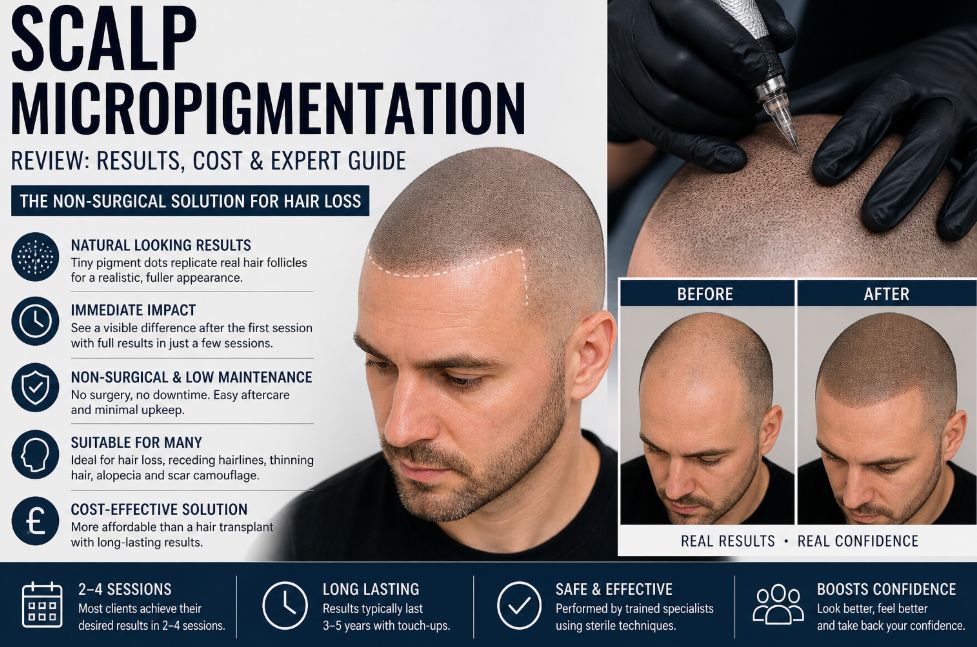
Hair loss is more than a cosmetic issue—it affects confidence, identity, and how people present themselves to the world. In the UK, where both surgical and non-surgical hair restoration options are widely available, one treatment has seen a sharp rise in popularity over recent years: scalp micropigmentation (SMP).
As a hair tourism expert working with patients across the UK and internationally, I’ve seen scalp micropigmentation evolve from a niche solution into a mainstream, highly refined treatment. This review offers an in-depth, practical, and experience-driven look at SMP—what it is, how it works, who it’s best for, and whether it’s worth considering as part of your hair restoration journey.
What Is Scalp Micropigmentation?
Scalp micropigmentation is a non-surgical cosmetic procedure that involves depositing tiny pigment dots into the scalp using specialised micro-needles. These dots replicate the appearance of natural hair follicles, creating the illusion of a fuller head of hair or a closely shaved buzz cut.
Unlike traditional tattoos, SMP uses specific techniques, pigments, and depths designed for the scalp. The goal is realism—each dot is carefully placed to match your natural hairline, density, and skin tone.
The result is not actual hair growth, but a visual enhancement that can dramatically improve the appearance of thinning or balding areas.
Why SMP Is Gaining Popularity in the UK
There are several reasons why scalp micropigmentation has become increasingly popular among UK patients:
1. Immediate Visual Results
Unlike treatments that require months to show progress, SMP delivers noticeable results almost instantly. After just a few sessions, the transformation can be striking.
2. Non-Surgical Approach
Many people are hesitant about undergoing hair transplant surgery due to cost, recovery time, or medical concerns. SMP offers a non-invasive alternative with minimal downtime.
3. Versatility
SMP is suitable for a wide range of hair loss conditions, including male pattern baldness, thinning hair, alopecia, and even scar camouflage.
4. Predictable Outcomes
Because SMP is a visual treatment rather than a biological one, results are highly predictable when performed by an experienced practitioner.
How Scalp Micropigmentation Works
The SMP process typically takes place over 2 to 4 sessions, spaced about a week apart. Each session builds on the previous one to create depth, density, and a natural finish.
Step 1: Consultation and Hairline Design
The process begins with a detailed consultation. This is where your practitioner assesses your hair loss pattern, discusses your goals, and designs a hairline that complements your facial structure and age.
A well-designed hairline is critical. Overly sharp or unnatural lines can make the result look artificial, while a softer, more irregular design often appears more realistic.
Step 2: Pigment Application
Using a specialised SMP device, the practitioner deposits pigment into the upper dermis of the scalp. The dots are layered gradually to build density and create a three-dimensional effect.
Step 3: Density Building
Subsequent sessions add more pigment and refine the overall look. This layering process is what gives SMP its natural appearance.
Step 4: Final Touches
The final session focuses on blending, softening edges, and ensuring consistency across the treated area.
Real-World Results: What to Expect
SMP results are immediate but continue to improve as sessions are completed.
After First Session
- Initial outline of hairline
- Light density across treated areas
- Slight redness that fades within 24–48 hours
After Second Session
- Increased density
- More defined look
- Improved blending
After Final Session
- Full, realistic appearance
- Natural-looking hairline
- Even coverage
The end result depends heavily on the skill of the practitioner. When done correctly, SMP can be virtually undetectable.
Who Is Scalp Micropigmentation Best For?
SMP is one of the most versatile hair loss solutions available.
Ideal Candidates
- Men with receding hairlines or baldness
- Individuals with thinning hair seeking added density
- People with alopecia (including total hair loss)
- Patients with scars from hair transplants or injuries
- Those who prefer a shaved or buzz-cut look
Less Suitable Candidates
- Individuals expecting actual hair regrowth
- Those unwilling to maintain a short hairstyle
- People with certain scalp conditions (unless cleared by a specialist)
SMP vs Hair Transplant: Key Differences
One of the most common questions UK patients ask is how SMP compares to hair transplants.
Scalp Micropigmentation
Pros:
- Non-surgical
- Immediate results
- Lower cost
- Minimal downtime
Cons:
- No real hair growth
- Requires maintenance over time
- Style limited to short hair or shaved look
Hair Transplant
Pros:
- Real, growing hair
- Long-term solution
- More styling options
Cons:
- Expensive
- Requires recovery
- Results take months
Many patients actually combine both treatments. SMP can enhance the appearance of a hair transplant by adding density and improving overall coverage.
SMP in Hair Tourism: Why Patients Travel
Hair tourism has become a major trend, with UK patients frequently travelling abroad for treatments.
Countries such as Turkey, Spain, and parts of Eastern Europe offer SMP at lower costs, often bundled with accommodation and transfers.
Advantages of Going Abroad
- Lower treatment costs
- Access to high-volume clinics
- Package deals
Considerations
- Quality varies significantly
- Follow-up care may be limited
- Travel costs can offset savings
From my experience, the best outcomes come from choosing a skilled practitioner rather than simply the cheapest option—whether in the UK or abroad.
Cost of Scalp Micropigmentation in the UK
SMP pricing varies depending on the extent of hair loss and clinic reputation.
Typical Price Ranges
- Minor density work: £500–£1,000
- Receding hairline: £1,000–£2,000
- Full scalp treatment: £2,000–£4,000
While this may seem like a significant investment, it is often more affordable than surgical options and requires less ongoing expense.
Maintenance and Longevity
SMP is not permanent but is considered semi-permanent.
How Long Does It Last?
- Typically 3–5 years before noticeable fading
- Touch-ups may be needed every 1–3 years
Factors Affecting Longevity
- Skin type
- Sun exposure
- Aftercare
- Pigment quality
Proper maintenance is essential to keep the results looking sharp and natural.
Aftercare: What You Need to Know
Aftercare plays a major role in the final outcome.
Immediate Aftercare
- Avoid washing the scalp for 3–4 days
- Stay out of direct sunlight
- Avoid sweating and intense exercise
Long-Term Care
- Use sunscreen on the scalp
- Keep the scalp moisturised
- Avoid harsh skincare products
Following these guidelines helps preserve pigment and maintain a natural look.
Common Mistakes to Avoid
Based on years of working with patients, these are the most frequent SMP mistakes:
Choosing an Inexperienced Practitioner
Poor technique can lead to unnatural hairlines, incorrect pigment depth, and colour changes over time.
Going Too Aggressive with Hairline Design
A low, sharp hairline may look good initially but often appears unnatural as you age.
Ignoring Aftercare
Neglecting aftercare can lead to uneven fading and reduced longevity.
Expecting Zero Maintenance
SMP requires periodic touch-ups to maintain its appearance.
Psychological Impact: Confidence and Identity
One of the most overlooked aspects of SMP is its psychological benefit.
Patients often report:
- Increased confidence
- Reduced anxiety about appearance
- Greater willingness to engage socially
Unlike treatments that take months to show results, SMP offers immediate visual improvement, which can have a powerful emotional impact.
Is SMP Safe?
When performed by a trained professional using sterile equipment and high-quality pigments, SMP is considered very safe.
Potential Risks
- Minor redness or irritation
- Allergic reactions (rare)
- Poor results from inexperienced practitioners
Choosing a reputable clinic significantly reduces these risks.
Pros and Cons Summary
Pros
- Immediate results
- Non-surgical
- Suitable for various hair loss types
- Low maintenance compared to other treatments
- Cost-effective
Cons
- No real hair growth
- Requires touch-ups
- Dependent on practitioner skill
- Limited hairstyle options
Final Verdict: Is Scalp Micropigmentation Worth It?
From a hair tourism expert’s perspective, scalp micropigmentation is one of the most effective non-surgical solutions for hair loss available today.
It doesn’t attempt to regrow hair—instead, it focuses on creating the appearance of density and structure. And in many cases, that visual improvement is exactly what patients need.
For UK patients, SMP offers a flexible option: it can be done locally with trusted practitioners or abroad at a lower cost. Either way, the key to success lies in choosing quality over convenience.
Should You Consider SMP?
If you are looking for a realistic, low-risk way to improve the appearance of hair loss without surgery, SMP is absolutely worth considering.
It is particularly effective if:
- You are comfortable with a shaved or closely cropped hairstyle
- You want immediate results
- You prefer a non-invasive approach
However, it’s important to approach SMP with clear expectations. It is an illusion—but when done correctly, it’s an exceptionally convincing one.
Closing Thoughts
In a market filled with promises of regrowth and miracle cures, scalp micropigmentation stands out for its honesty. It doesn’t claim to reverse hair loss—it offers a practical, visually effective solution that works with your existing look.
For many UK patients, that balance of realism, affordability, and immediate impact makes SMP not just an alternative, but a preferred choice.
If you’re exploring your options, take the time to research clinics, review portfolios, and speak with experienced practitioners. The right decision can transform not just your appearance, but how you feel about yourself every day.