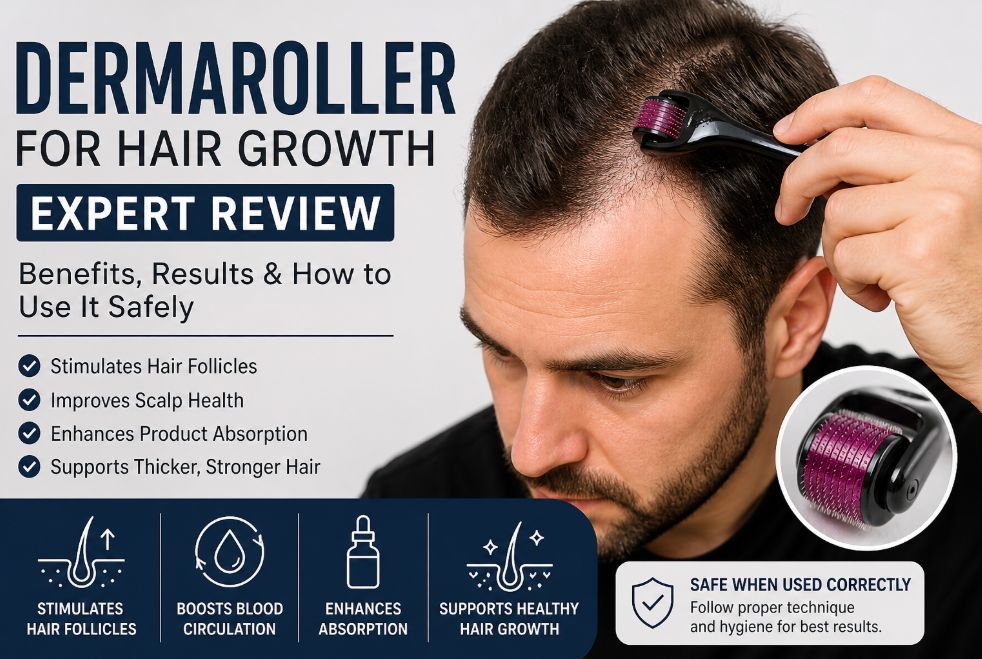
Hair loss has quietly evolved into one of the most common aesthetic concerns worldwide, and the UK is no exception. From early thinning in your 20s to more advanced hair loss patterns later in life, people are increasingly seeking solutions that are effective, affordable, and accessible. Among the many treatments available today, the dermaroller has carved out a strong reputation—especially among those exploring hair restoration options both locally and abroad.
As a hair tourism expert who has worked closely with clinics, patients, and treatment technologies across Europe and beyond, I’ve seen firsthand how dermarollers fit into modern hair care routines. This review offers a comprehensive, experience-informed look at dermarollers—how they work, their real benefits, limitations, and whether they deserve a place in your hair growth strategy.
What Is a Dermaroller?
A dermaroller is a handheld device equipped with a cylindrical drum covered in tiny, fine needles. When rolled across the scalp, these needles create micro-injuries in the skin—a process known as microneedling.
While the concept may sound intense, the goal is not damage but stimulation. These micro-injuries trigger the body’s natural healing response, which includes increased blood flow, collagen production, and activation of growth factors. When applied to the scalp, this process can help awaken dormant hair follicles and improve overall hair density.
Dermarollers come in various needle lengths, typically ranging from 0.25 mm to 1.5 mm for home use. In clinical settings, longer needles may be used under professional supervision.
Why Dermarolling Has Gained Popularity in the UK
The rise of dermarollers in the UK is closely tied to a broader shift toward non-invasive and cost-effective hair loss treatments. Hair transplants remain highly effective, but they are also expensive and require downtime. Dermarolling, on the other hand, offers a low-cost, at-home alternative or complement to other treatments.
Additionally, increased awareness of combination therapies—particularly pairing microneedling with topical treatments—has boosted its credibility. Many users now see dermarolling not as a standalone miracle cure, but as a powerful enhancer of existing regimens.
How Dermarolling Supports Hair Growth
Understanding the mechanism behind dermarolling is key to appreciating its value.
1. Stimulating Blood Circulation
Microneedling increases blood flow to the scalp. Improved circulation delivers more oxygen and nutrients to hair follicles, which is essential for healthy growth.
2. Activating Growth Factors
The body responds to micro-injuries by releasing growth factors that aid in tissue repair. These factors can stimulate hair follicles and prolong the growth (anagen) phase of the hair cycle.
3. Enhancing Absorption of Topical Treatments
One of the most important benefits of dermarolling is its ability to improve the absorption of topical products. Treatments such as minoxidil or peptide serums can penetrate deeper into the scalp when used after microneedling.
4. Collagen Production
Collagen plays a role in maintaining scalp health. Increased collagen production can improve the structural environment around hair follicles, making it more conducive to growth.
Real-World Results: What You Can Expect
Dermarolling is not an overnight solution. Results vary depending on consistency, technique, and whether it’s combined with other treatments.
Short-Term (4–8 Weeks)
- Improved scalp health
- Slight reduction in hair shedding
- Better absorption of topical treatments
Mid-Term (3–6 Months)
- Noticeable increase in hair thickness
- Reduced thinning in early-stage hair loss
- Emergence of fine “baby hairs” in treated areas
Long-Term (6–12 Months)
- Improved density in some users
- Stronger, healthier strands
- Maintenance of existing hair
It’s important to note that dermarolling tends to be most effective for individuals with early to moderate hair loss. Those with advanced baldness may see limited results unless combining it with medical or surgical treatments.
Dermaroller vs. Clinical Microneedling
Many UK users ask whether at-home dermarolling compares to professional microneedling treatments offered in clinics.
At-Home Dermaroller
Pros:
- Affordable
- Convenient
- Suitable for maintenance
Cons:
- Limited needle depth
- Requires discipline and consistency
- Higher risk of improper use
Clinical Microneedling
Pros:
- Deeper penetration
- Performed by trained professionals
- Often combined with advanced therapies (PRP, serums)
Cons:
- More expensive
- Requires appointments
- Potential downtime
For many people, the ideal approach is a hybrid model: professional treatments every few months, supported by consistent at-home dermarolling.
How to Use a Dermaroller Safely
Using a dermaroller correctly is crucial to achieving results and avoiding complications.
Step-by-Step Guide
- Clean the device thoroughly before and after each use
- Wash your scalp to remove oils and debris
- Roll gently in multiple directions (horizontal, vertical, diagonal)
- Avoid excessive pressure—the goal is stimulation, not injury
- Apply topical treatments after rolling, if part of your routine
- Disinfect the roller again before storing
Frequency
- 0.25 mm: 2–3 times per week
- 0.5 mm: once per week
- 1.0 mm+: every 10–14 days
Overuse can lead to irritation and reduced effectiveness, so consistency should always be balanced with recovery.
Common Mistakes to Avoid
From my experience working with international patients, these are the most frequent errors:
1. Using Too Much Pressure
More force does not mean better results. Excessive pressure can damage the scalp and hinder progress.
2. Poor Hygiene
Failing to sterilise the dermaroller can lead to infections, which can worsen hair loss rather than improve it.
3. Inconsistent Use
Dermarolling requires commitment. Sporadic use will not deliver meaningful results.
4. Expecting Immediate Results
Hair growth is a slow biological process. Unrealistic expectations often lead to premature disappointment.
5. Ignoring Underlying Causes
Hormonal imbalances, genetics, and medical conditions must be addressed alongside dermarolling for optimal outcomes.
Who Should Consider Dermarolling?
Dermarolling is particularly suitable for:
- Individuals with early-stage hair thinning
- People looking to enhance topical treatments
- Those not ready for or unable to undergo surgery
- Patients maintaining results after a hair transplant
It may not be ideal for:
- Individuals with active scalp infections
- Those with severe dermatological conditions
- People with advanced baldness seeking dramatic regrowth
Dermarolling in Hair Tourism: A Strategic Tool
In the context of hair tourism, dermarolling plays a unique role.
Many patients travel abroad—particularly to countries like Turkey—for hair transplants due to lower costs and high-quality clinics. However, the journey doesn’t end after the procedure.
Dermarolling is often recommended as part of post-transplant maintenance, helping to:
- Improve graft survival
- Enhance density over time
- Support long-term scalp health
Additionally, for those not yet ready for surgery, dermarolling can serve as a “pre-treatment,” potentially slowing hair loss and improving the scalp environment before a transplant.
Cost vs. Value
One of the strongest advantages of dermarollers is their affordability.
A quality dermaroller typically costs between £10 and £30 in the UK. Compared to clinical treatments or surgical options, this is a minimal investment.
However, value should not be judged by price alone. The real benefit lies in:
- Consistent use over time
- Integration with other treatments
- Proper technique
When used correctly, dermarolling offers one of the highest returns on investment in the non-surgical hair restoration space.
Pros and Cons
Pros
- Cost-effective
- Non-invasive
- Enhances absorption of treatments
- Can be used at home
- Minimal downtime
Cons
- Requires consistency
- Results are gradual
- Risk of improper use
- Limited effectiveness for advanced hair loss
Final Verdict
From a hair tourism expert’s perspective, the dermaroller is not a miracle cure—but it is a highly valuable tool when used correctly.
Its strength lies in its versatility. Whether you are just beginning to notice hair thinning, maintaining the results of a transplant, or looking to boost the effectiveness of topical treatments, dermarolling offers a practical and accessible solution.
For UK users, it represents an entry point into proactive hair care—one that doesn’t require travel, high costs, or invasive procedures. At the same time, it integrates seamlessly into broader treatment plans, including those involving international clinics.
The key is to approach dermarolling with realistic expectations, proper technique, and a commitment to consistency. When those elements are in place, the results can be genuinely worthwhile.
Is Dermarolling Worth It?
If your goal is to improve scalp health, enhance existing treatments, and take a proactive approach to hair loss, then yes – dermarolling is absolutely worth considering.
It won’t replace medical treatments or surgery in more advanced cases, but it can significantly improve outcomes when used as part of a comprehensive strategy.
In a landscape filled with exaggerated claims and quick fixes, the dermaroller stands out for a different reason: it works with your body, not against it. And in the long run, that’s what makes the difference.
If you’re considering dermarolling as part of your hair journey, the best approach is to combine it with informed guidance, whether from a UK-based specialist or a reputable international clinic. The right strategy can turn a simple tool into a powerful ally in your fight against hair loss.