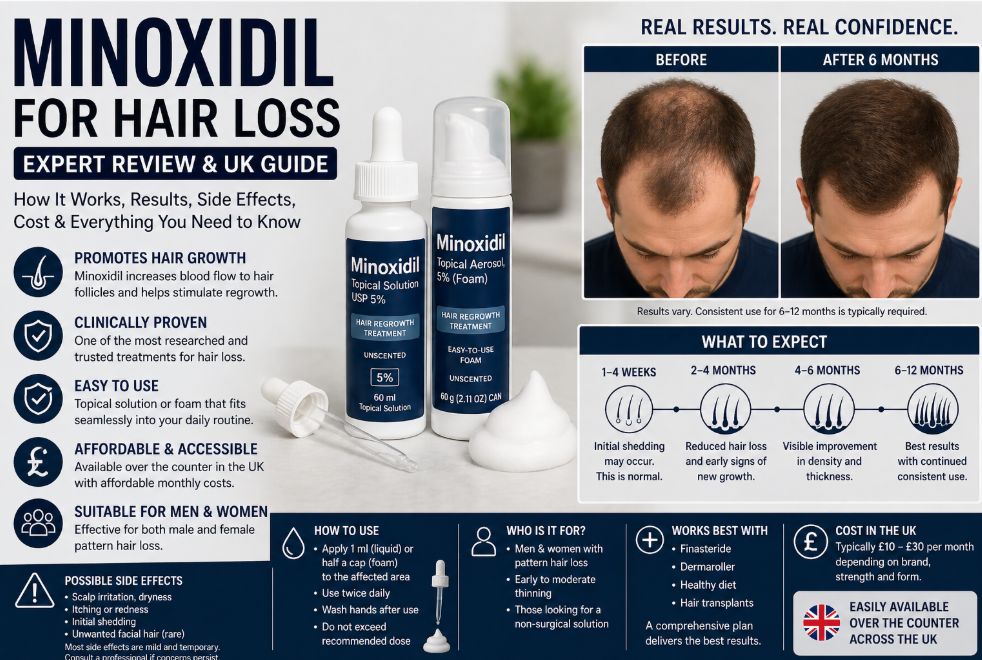
Hair loss is one of the most common concerns I encounter when working with clients across the UK and international hair restoration clinics. While surgical options like transplants often dominate conversations, non-surgical treatments remain the foundation of most successful hair strategies. Among them, minoxidil stands out as one of the most widely used and accessible solutions.
In this in-depth review, I’ll break down everything you need to know about minoxidil—from how it works and what results to expect, to how it fits into a broader hair tourism strategy. Whether you’re just starting to notice thinning or looking to maintain results after a procedure, this guide will help you make an informed decision.
What Is Minoxidil?
Minoxidil is a topical treatment applied directly to the scalp to promote hair growth and slow hair loss. Originally developed as a medication for high blood pressure, researchers discovered that one of its side effects was increased hair growth. This led to its development as a dedicated treatment for hair loss.
In the UK, minoxidil is available over the counter in liquid or foam form, typically in 2% and 5% strengths. It’s commonly used for male and female pattern hair loss and is one of the few treatments that doesn’t require a prescription.
How Minoxidil Works
Minoxidil doesn’t target hormones like some other treatments. Instead, it works by improving the environment around hair follicles.
1. Increased Blood Flow
Minoxidil acts as a vasodilator, meaning it widens blood vessels. This improves blood circulation to the scalp, delivering more oxygen and nutrients to hair follicles.
2. Prolonging the Growth Phase
Hair grows in cycles, and minoxidil helps extend the anagen (growth) phase. This allows hair to grow longer and thicker before shedding.
3. Revitalising Dormant Follicles
Minoxidil can stimulate follicles that have become inactive, encouraging them to produce hair again.
Why Minoxidil Is So Popular in the UK
Minoxidil has maintained its popularity for several key reasons:
Accessibility
You don’t need a prescription, making it one of the easiest treatments to start immediately.
Proven Track Record
It has been used for decades and remains one of the most studied non-surgical hair loss treatments.
Flexibility
It can be used alone or combined with other treatments such as finasteride, dermarolling, or hair transplants.
Low Barrier to Entry
Compared to clinical treatments or surgery, minoxidil is affordable and easy to incorporate into daily life.
Real-World Results: What to Expect
Understanding realistic timelines is crucial when starting minoxidil.
Weeks 1–4: Adjustment Phase
- Some users experience increased shedding
- This is often a sign that weaker hairs are being replaced
Months 2–4: Early Changes
- Reduced hair loss
- Slight thickening of existing hair
Months 4–6: Visible Progress
- Noticeable regrowth in some areas
- Improved density
Months 6–12: Peak Results
- Stronger, thicker hair
- Fuller appearance
Consistency is essential. Missing applications can reduce effectiveness and slow progress.
Foam vs Liquid: Which Is Better?
Minoxidil is available in two main forms.
Liquid Minoxidil
Pros:
- Often cheaper
- Easier to apply to specific areas
Cons:
- Can cause irritation in some users
- Takes longer to dry
Foam Minoxidil
Pros:
- Less likely to irritate the scalp
- Dries quickly
- Easier to use for some
Cons:
- Slightly more expensive
- Can be harder to apply precisely
Both forms are effective, so the choice often comes down to personal preference.
Minoxidil vs Other Hair Loss Treatments
Minoxidil vs Finasteride
- Minoxidil improves scalp conditions and stimulates growth
- Finasteride targets hormonal causes of hair loss
Using both together often produces better results than either alone.
Minoxidil vs Dermarolling
- Minoxidil promotes growth
- Dermarolling enhances absorption and stimulates the scalp
These two treatments are commonly combined.
Minoxidil vs Hair Transplant
- Minoxidil supports existing hair
- Hair transplants restore lost hair
Minoxidil is often recommended before and after surgery.
Minoxidil in Hair Tourism
Hair tourism has grown significantly, with many UK patients travelling abroad for treatments. Minoxidil plays an important role in this landscape.
Before Travelling
Many clinics recommend starting minoxidil before undergoing procedures to strengthen existing hair.
After a Hair Transplant
Minoxidil is often used post-transplant to:
- Support graft survival
- Improve density
- Maintain surrounding hair
As an Alternative to Surgery
For those not ready for a transplant, minoxidil can delay the need for surgical intervention.
How to Use Minoxidil Correctly
Proper application is key to success.
Step-by-Step Guide
- Ensure your scalp is clean and dry
- Apply the recommended amount (usually 1 ml or half a capful of foam)
- Spread evenly across the affected area
- Allow it to dry before styling
Frequency
- Typically applied twice daily for best results
Consistency matters more than anything else.
Common Mistakes to Avoid
From my experience, these are the most frequent issues:
Inconsistent Use
Skipping applications reduces effectiveness.
Using Too Much
More product does not mean better results.
Stopping Too Early
Many users quit before seeing meaningful improvements.
Expecting Instant Results
Hair growth takes time—patience is essential.
Side Effects: What You Should Know
Minoxidil is generally well tolerated, but some side effects can occur.
Common Side Effects
- Scalp irritation
- Dryness or flaking
- Itching
Less Common Effects
- Unwanted facial hair growth (due to transfer)
- Initial shedding
Most side effects are mild and manageable.
Is Minoxidil Safe?
Minoxidil has a long safety record and is considered safe for most users when used as directed.
Key Considerations
- Avoid contact with eyes
- Wash hands after application
- Follow instructions carefully
If you have underlying medical conditions, it’s always best to consult a professional.
Who Should Use Minoxidil?
Minoxidil is particularly suitable for:
- Early to moderate hair loss
- Thinning at the crown
- Individuals seeking non-surgical options
- Patients maintaining transplant results
It may be less effective for:
- Advanced baldness
- Completely inactive follicles
Cost of Minoxidil in the UK
Minoxidil is one of the most affordable treatments available.
Typical Costs
- £10–£30 per month depending on brand and strength
This makes it accessible for long-term use.
Psychological Impact
Hair loss can significantly affect confidence.
Many users report:
- Increased self-esteem
- Reduced anxiety about appearance
- Greater control over their hair journey
Even modest improvements can have a meaningful emotional impact.
Long-Term Commitment
Minoxidil is not a one-time solution.
What Happens If You Stop?
- Hair gained or maintained with minoxidil may gradually be lost
- Hair returns to its previous state over time
This makes it a long-term commitment.
Pros and Cons
Pros
- Widely available
- Easy to use
- Affordable
- Clinically supported
- Works well with other treatments
Cons
- Requires ongoing use
- Results vary
- Can cause mild irritation
- Not effective for everyone
Expert Insight: Where Minoxidil Fits in a Strategy
From a hair tourism perspective, minoxidil is rarely used in isolation.
The most effective approaches combine:
- Preventative treatments
- Stimulation methods
- Surgical options when needed
Minoxidil acts as a foundation—supporting and enhancing other treatments.
Final Verdict: Is Minoxidil Worth It?
Minoxidil is not a miracle cure, but it is one of the most reliable and accessible tools for managing hair loss.
For UK patients, it offers:
- A low-risk starting point
- A cost-effective long-term option
- A valuable complement to other treatments
When used consistently and correctly, it can deliver meaningful improvements.
Should You Start Minoxidil?
If you are noticing thinning hair and want to take action early, minoxidil is absolutely worth considering.
It is especially useful if:
- You want a non-invasive solution
- You are not ready for surgery
- You want to maintain existing hair
However, success depends on realistic expectations and commitment.
Closing Thoughts
In the world of hair loss treatments, minoxidil has stood the test of time for a reason. It is simple, accessible, and effective when used properly.
While it may not deliver dramatic transformations on its own, it plays a critical role in maintaining and improving hair over the long term.
For UK patients navigating both local and international treatment options, minoxidil remains one of the most practical and dependable choices available today.