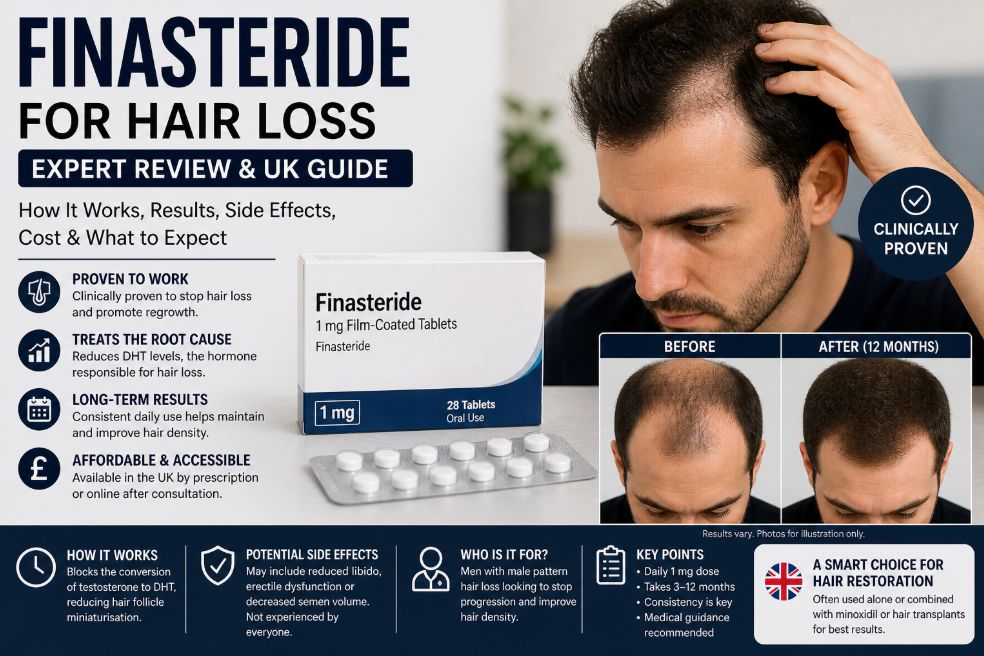
Hair loss remains one of the most common concerns among men in the UK, affecting confidence, appearance, and overall wellbeing. While there are many treatments available, few have been studied, prescribed, and debated as extensively as finasteride.
As a hair tourism expert working with patients across the UK and international clinics, I’ve seen finasteride play a central role in both preventing hair loss and supporting long-term restoration strategies. This review offers a detailed, practical, and experience-based look at finasteride—how it works, what results you can expect, potential risks, and whether it’s the right choice for your hair journey.
What Is Finasteride?
Finasteride is an oral medication originally developed to treat prostate conditions but later found to be highly effective in slowing and preventing hair loss. It is now widely prescribed for male pattern baldness and is considered one of the most clinically proven treatments available.
In the UK, finasteride is typically available via prescription and taken as a daily tablet.
How Finasteride Works
To understand finasteride, you need to understand the root cause of most hair loss in men: a hormone called DHT (dihydrotestosterone).
DHT is a derivative of testosterone and plays a key role in shrinking hair follicles in individuals genetically predisposed to hair loss. Over time, affected follicles become smaller, producing thinner and shorter hairs until they eventually stop growing altogether.
Finasteride works by blocking the enzyme (5-alpha-reductase) responsible for converting testosterone into DHT. By reducing DHT levels in the scalp, finasteride helps:
- Slow down hair follicle miniaturisation
- Preserve existing hair
- Potentially stimulate regrowth in some cases
Why Finasteride Is So Widely Used in the UK
Finasteride has become a cornerstone of hair loss treatment in the UK for several reasons:
1. Strong Clinical Evidence
Few hair loss treatments have the same level of long-term clinical backing. Finasteride has been studied extensively, with consistent evidence showing its effectiveness in slowing hair loss.
2. Convenience
A once-daily tablet makes it easy to integrate into your routine without the need for complicated applications or clinic visits.
3. Preventative Power
Unlike many treatments that focus on regrowth, finasteride is particularly effective at preventing further hair loss, which is often the most important factor in maintaining a natural appearance.
4. Compatibility with Other Treatments
Finasteride is often combined with other treatments such as minoxidil, dermarolling, or hair transplants to enhance overall results.
Real-World Results: What to Expect
One of the most important aspects of finasteride is understanding realistic timelines and outcomes.
First 1–3 Months
- Possible reduction in hair shedding
- Some users experience temporary shedding (a normal part of the cycle reset)
3–6 Months
- Noticeable stabilisation of hair loss
- Hair may begin to feel thicker
6–12 Months
- Visible improvement in density for some users
- Stronger, healthier strands
12+ Months
- Maximum results typically achieved
- Continued use maintains progress
It’s important to emphasise that finasteride works best as a long-term treatment. Stopping the medication usually leads to a gradual return of hair loss.
Finasteride vs Other Hair Loss Treatments
Finasteride is often compared with other common solutions.
Finasteride vs Minoxidil
- Finasteride targets the hormonal cause of hair loss
- Minoxidil improves blood flow and stimulates follicles
Many users achieve the best results by combining both treatments.
Finasteride vs Hair Transplant
- Finasteride prevents further loss
- Hair transplants restore lost hair
Most reputable clinics recommend finasteride before and after a transplant to protect existing hair and maintain results.
Finasteride in Hair Tourism
Hair tourism—travelling abroad for hair treatments—has grown significantly, particularly among UK patients heading to countries like Turkey.
Finasteride plays a critical role in this space:
Before a Hair Transplant
Clinics often recommend starting finasteride before surgery to stabilise hair loss and improve the overall outcome.
After a Hair Transplant
Finasteride helps preserve non-transplanted hair, ensuring the results remain balanced and natural over time.
As a Standalone Option
Some patients delay or avoid surgery altogether by using finasteride effectively in the early stages of hair loss.
From my experience, patients who combine finasteride with a well-planned treatment strategy—whether in the UK or abroad—achieve the most sustainable results.
Side Effects: What You Need to Know
No honest review of finasteride would be complete without addressing side effects.
Commonly Reported Side Effects
- Reduced libido
- Erectile dysfunction
- Decreased semen volume
Less Common Effects
- Mood changes
- Breast tenderness
It’s important to note:
- Most users do not experience significant side effects
- Side effects are often reversible upon discontinuation
- The perception of side effects can sometimes be influenced by expectation
That said, finasteride is a medication that affects hormone levels, so it should always be taken with proper medical guidance.
Addressing Concerns: Is Finasteride Safe?
Finasteride has been used for decades and is generally considered safe when prescribed appropriately.
Key Considerations
- Always consult a qualified healthcare professional
- Follow prescribed dosages
- Monitor any changes in your body
For UK patients, regulated prescriptions and access to medical advice provide an additional layer of safety compared to unregulated sources.
Who Should Consider Finasteride?
Finasteride is particularly suitable for:
- Men experiencing early to moderate hair loss
- Individuals looking to prevent further thinning
- Patients planning or maintaining a hair transplant
- Those seeking a long-term solution
It may not be suitable for:
- Women (especially during pregnancy)
- Individuals with certain medical conditions
- Those unwilling to commit to long-term use
Cost of Finasteride in the UK
Finasteride is relatively affordable compared to many other hair loss treatments.
Typical Costs
- £10–£30 per month depending on provider
- Online prescriptions may vary in price
When viewed as a long-term investment in hair preservation, finasteride offers strong value for money.
Common Mistakes to Avoid
Through years of working with patients, these are the most frequent mistakes:
1. Expecting Immediate Results
Finasteride works gradually. Patience is essential.
2. Stopping Too Early
Many users quit before seeing full results, often within the first few months.
3. Inconsistent Use
Skipping doses reduces effectiveness.
4. Ignoring Combination Treatments
Finasteride is powerful, but combining it with other treatments often yields better outcomes.
5. Overestimating Regrowth
Finasteride is better at maintaining hair than regrowing large amounts.
Psychological Impact: More Than Just Hair
Hair loss can significantly affect self-esteem, especially in younger men.
Patients using finasteride often report:
- Increased confidence
- Reduced anxiety about hair loss progression
- Greater control over their appearance
Unlike cosmetic treatments that offer instant results, finasteride provides a sense of long-term stability, which can be equally valuable.
Finasteride and Long-Term Strategy
One of the biggest advantages of finasteride is its role in long-term planning.
Rather than reacting to hair loss after it becomes severe, finasteride allows you to:
- Slow progression early
- Maintain a natural look
- Delay or reduce the need for surgery
In many cases, patients who start finasteride early avoid more aggressive treatments later.
Pros and Cons
Pros
- Clinically proven effectiveness
- Slows and prevents hair loss
- Convenient daily use
- Affordable
- Works well with other treatments
Cons
- Requires long-term commitment
- Potential side effects
- Results take time
- Limited regrowth in advanced cases
Final Verdict: Is Finasteride Worth It?
From a hair tourism expert’s perspective, finasteride is one of the most important tools in modern hair loss management.
It is not a quick fix or a cosmetic shortcut—it is a foundational treatment that addresses the root cause of hair loss. For many UK patients, it forms the backbone of a successful hair restoration strategy.
Whether you plan to stay local or explore treatment abroad, finasteride can significantly improve your long-term outcomes when used correctly.
Should You Start Finasteride?
If you are noticing early signs of hair loss and want to take a proactive approach, finasteride is absolutely worth considering.
It is especially valuable if:
- You want to preserve your current hair
- You are considering a hair transplant
- You prefer a medically backed solution
However, it’s essential to approach finasteride with realistic expectations and proper medical guidance.
Closing Thoughts
In a market full of exaggerated claims and short-term fixes, finasteride stands out for its consistency and scientific backing.
It doesn’t promise overnight transformation—but it offers something far more valuable: control.
For UK patients navigating the complex world of hair loss treatments, that control can make all the difference. Whether used alone or as part of a broader strategy, finasteride remains one of the most reliable options available today.
The key is commitment, patience, and informed decision-making. When those elements come together, finasteride can be a powerful ally in maintaining both your hair and your confidence.